
None of this is legal advice. Suppressor law is changing quickly, and it varies enormously between states.
1. Suppressors are illegal to own
They are legal to own in most of the United States. A minority of states prohibit them outright, and those states do not offer a registration path at all.
Everywhere else, the National Firearms Act has historically governed the purchase, which meant a Form 4 application, an additional set of fingerprints, a tax stamp, and a wait on the ATF that could run many months.
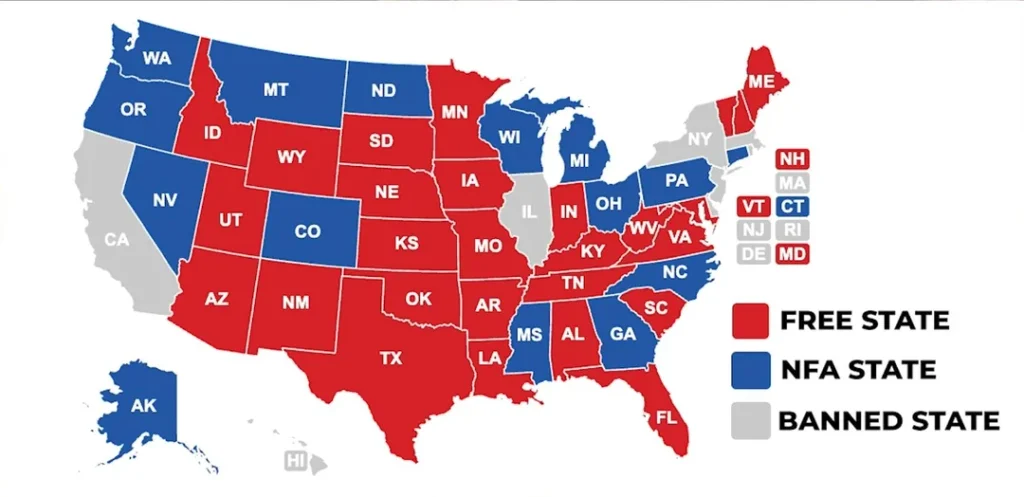
But That picture has shifted. In roughly two dozen states, enforcement of the registration requirement has been enjoined for covered buyers, and those buyers can now walk into a dealer, pass the same background check used for any other firearm, and leave the same day.
Check out silencerco for detailed info here
The important qualification is that suppressors remain NFA firearms by statute. The underlying law has not been repealed, only partly blocked in its enforcement. That distinction matters, because it is why the situation is genuinely unsettled and why some owners worry the position could reverse. It is also why crossing a state line with a suppressor is a live risk rather than a technicality, particularly for someone who lives in one state and shoots in another. Anyone in that position should confirm the current rules before travelling.
2. A silencer and a suppressor are different things
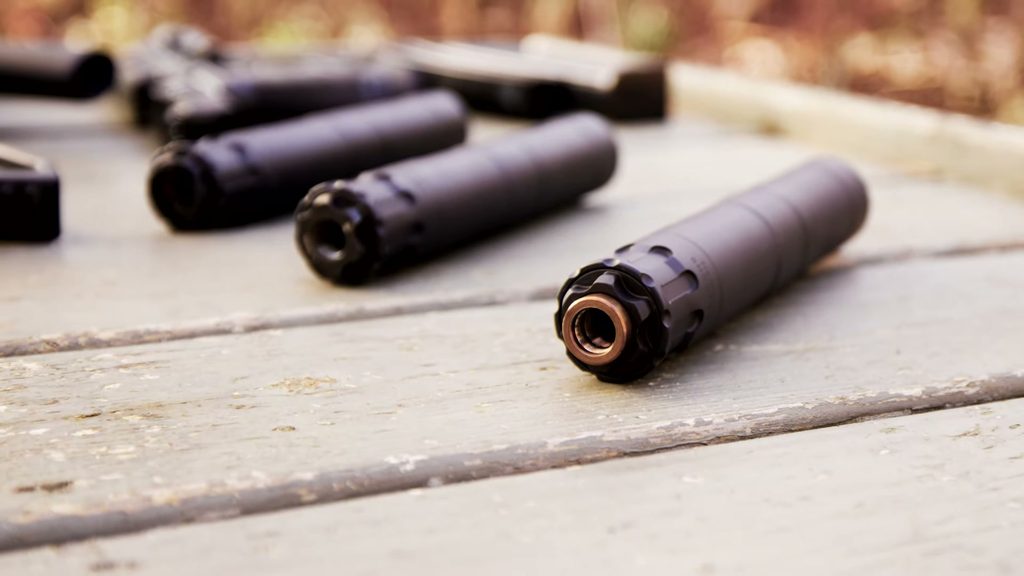
They are the same object. The two words describe one device.
The split is political rather than technical. “Silencer” implies the device makes a gun silent, which frames civilian ownership as a public safety question. “Suppressor” describes what the device actually does, which frames it as a hearing health question. Which word a person reaches for tends to reveal which argument they are making.
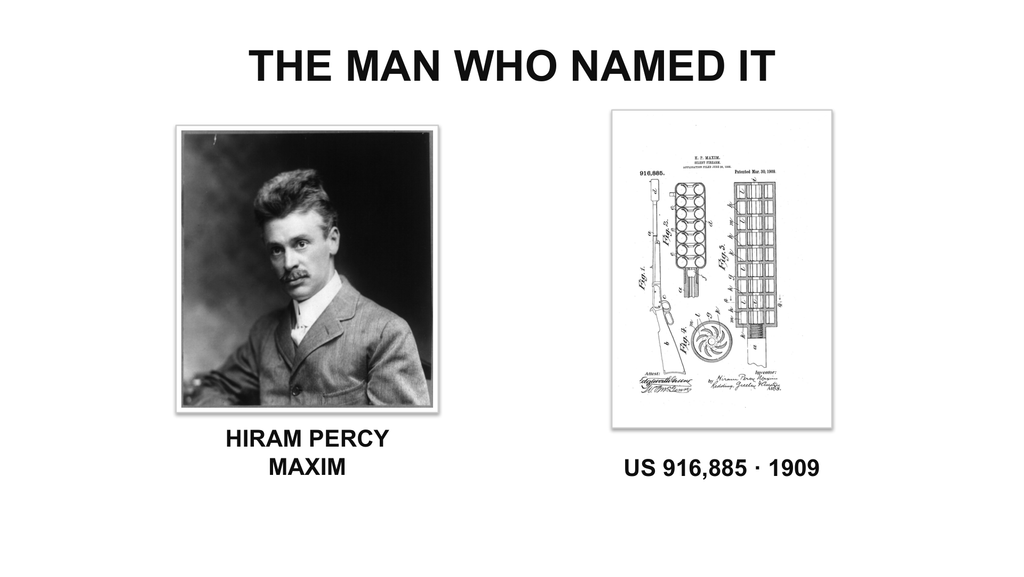
Historically, “silencer” came first. An inventor patented the first commercially successful firearm silencing device in the early 1900s and sold it under the Maxim name, and the term stuck.
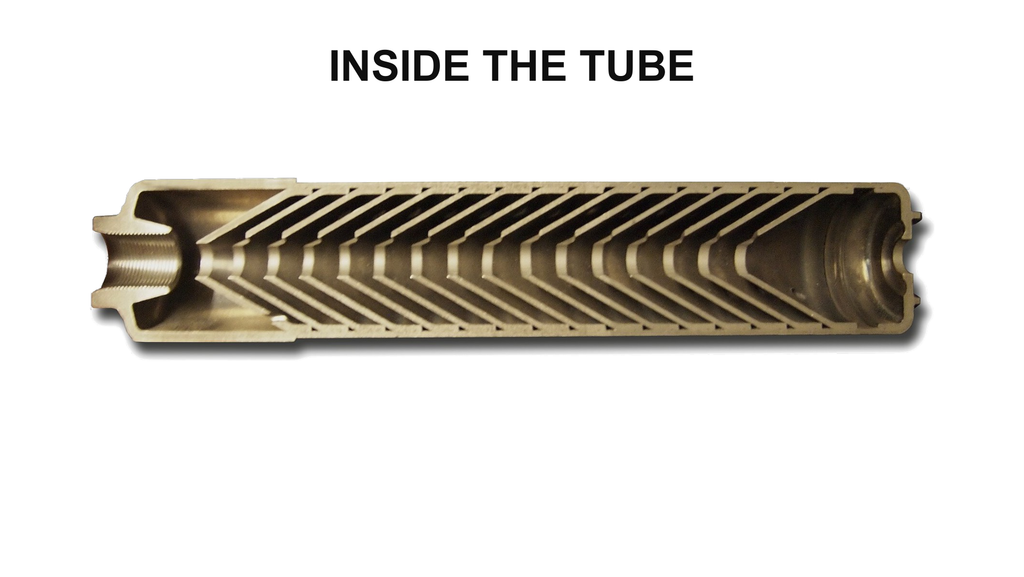
Inside the tube, a stack of chambers traps high pressure combustion gas for a fraction longer than the muzzle would, giving it room to slow and cool before release. That drops the volume substantially. It does not eliminate it. A shooter still hears the action cycling, and on supersonic ammunition still hears the sonic boom of the bullet itself.
Within the industry the device is usually called a can. In some countries it is a moderator, though that usage is rare in the United States.
3. Nothing is actually that quiet
This one is closer to true than most enthusiasts admit, but it has a real exception.
Critics of the Hollywood portrayal are correct that a suppressed centerfire rifle is loud. Most centerfire ammunition travels faster than sound, and the crack a listener hears is the bullet breaking the sound barrier, not the muzzle. No device attached to the front of the barrel can suppress a noise the bullet makes downrange. Expecting a cartridge travelling at three times the speed of sound to go quiet is unreasonable.
The exception is subsonic ammunition. Below roughly 1100 feet per second there is no sonic boom to hear, and a suppressed .300 Blackout firing subsonic loads genuinely approaches what people picture from films. What remains audible is mechanical, the sound of metal cycling, and often the bullet striking a steel target, which can be louder than the shot itself.
Getting there involves tuning. Subsonic loads frequently lack the energy to cycle an action reliably, so builders compensate with reduced power buffer springs or by using suppressor back pressure to work the gun. Short stroking is the common failure.
4. Any gun can be suppressed?
Most can. The notable exception is the revolver.
A revolver’s cylinder has to rotate, which requires a gap between the cylinder and the barrel. Every shot vents a jet of gas sideways through that gap. A suppressor threaded to the muzzle catches what exits the front and does nothing about what escapes at the cylinder.
There is one historical workaround. The Russian Nagant M1895 was designed so that cocking the hammer pushes the entire cylinder forward until it seats against the rear of the barrel. Its cartridge case is long enough that the neck of the brass extends past the bullet and expands into the barrel on firing, sealing the joint. It is the one common revolver a suppressor works properly on, and it is a design curiosity rather than a practical option.
5. Hunting with a suppressor is illegal
Suppressed hunting is legal in nearly every state where suppressor ownership itself is legal. Connecticut is the outlier that will sell a resident a suppressor and then prohibit taking it into the field.

That prohibition is backwards, because hunting is the use case where the device does the most obvious good. A hunter takes a shot with no hearing protection, often standing beside their own dog, and a suppressor is what makes it possible to leave the plugs out and still hear an animal moving.
More states have opened suppressed hunting in recent years, and some that permit it restrict it by species or season. The regulations booklet is worth reading before the season starts.
Hog hunting deserves a specific mention. Without a supersonic crack, a group is far less likely to scatter after the first shot, which matters when the goal is population control rather than a single animal.
6. They are only for military and police
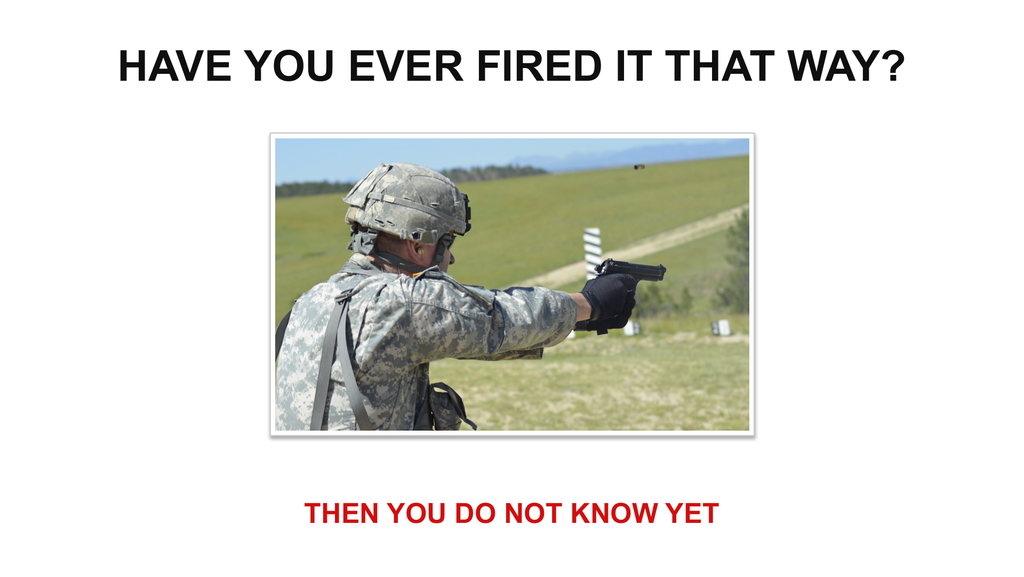
The tactical framing casts the suppressor as special operations equipment. In practice its civilian uses are mostly unglamorous.
A suppressor reduces the concussion that causes new shooters to flinch, which makes it a genuinely useful teaching tool. It makes range sessions less punishing, indoors especially. For anyone shooting on their own property, it is frequently the difference between neighbours who tolerate the noise and a deputy arriving on a shots fired call.
In a defensive context, the argument is that a less overwhelming report leaves a person better able to think, and better able to hear family members, than an unsuppressed shot in an enclosed space.
7. The brain protects the ears under stress
Auditory exclusion is real. Under sufficient stress the brain stops processing input it has judged irrelevant, and people genuinely do not register the sound of shots they fired themselves.
It is not hearing protection, and the distinction is physical rather than semantic. By the time the brain declines to process the noise, the pressure wave has already travelled the ear canal, already moved the eardrum, and already bent hair cells in the inner ear that do not regenerate. Choosing not to file a sound does not reach back and undo the damage that caused it.
The ear does have a genuine protective reflex. A small muscle in the middle ear tightens and stiffens the ossicles in response to loud sound. It is far too slow for gunfire. The shot has come and gone before the muscle begins to move.
The reflex also does nothing for anyone else in the building, because a person who did not know the shot was coming never experiences the stress response in the first place.
8. A suppressor is the obvious home defence choice
The case for it is strong and usually only half told.
A rifle fired inside a house is likely the loudest thing most people will ever stand next to. Indoors the report reflects off walls and returns to the shooter instead of dissipating across open ground. It is worth remembering what a SWAT team deliberately throws through a door before entering. A flashbang is louder still, and disorienting everyone present is the point of it.
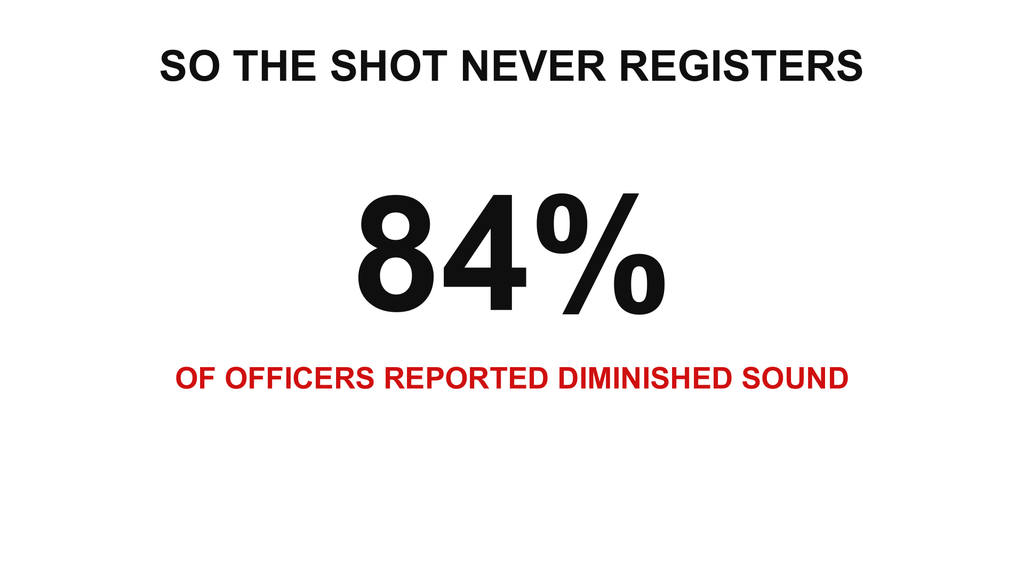
So the benefits are real. A suppressed shot leaves a person able to hear, able to direct family members, able to hear them answer, and not blinded by their own muzzle flash in a dark house.
The other half is rarely mentioned. A full length rifle with a can on the muzzle is longer than a person’s arm, and all of that length precedes them around a corner. A suppressor on a pistol turns a compact gun into a long, nose heavy one that no longer points like the gun its owner trained with.
There is a mechanical cost too. Added back pressure can stop a gun cycling reliably, which is a poor discovery to make on the firearm someone is betting their life on. Worse is a baffle strike, where a misaligned bullet clips the inside of the suppressor.
Handguns complicate this further. Most modern pistols use a tilting barrel to unlock and cycle, and hanging weight off the muzzle changes how that tilt behaves. The Beretta M9 is a useful counterexample, since its barrel travels straight back rather than tilting.
There is also an argument for shooting unsuppressed, which is that neighbours who hear shots may call the police. Officers who work patrol can attest that calls arrive this way.
The honest conclusion is that nobody knows how their setup behaves until they have fired it, suppressed, with the ammunition they actually keep loaded.
9. A suppressor slows the bullet down
This myth circulates in both directions. One camp holds that a suppressor slows the bullet by disrupting gas behind it. The other holds that it speeds the bullet up by giving that gas more room to work.
Both effects are real, and neither is large enough to matter. A rimfire may leave marginally faster with a can attached. A centerfire rifle may leave marginally slower. In both cases the difference is small enough to be irrelevant outside a controlled test.
For perspective, shooting on a cold day moves velocity more than a suppressor does, because denser air changes the numbers more than the device ever will.
Any change in velocity does move the point of impact, however, which is what people are usually gesturing at when they claim a suppressor ruins accuracy.
10. Suppressors ruin accuracy
A suppressor does change how a rifle shoots. It does not ruin it.
When a rifle fires, the barrel flexes, and it does so in a pattern that repeats shot after shot. That repeatability is the reason a rifle can group at all. Adding mass to the muzzle changes the pattern, and the group can move as a result. The principle is the same one behind a free float handguard, where the goal is to keep anything from touching the barrel and altering its harmonics.
Most shooters have already seen this happen without a suppressor involved. A barrel heated by a long string opens groups up for the same underlying reason, because hot steel behaves differently from cold steel.
A rifle that groups tightly still groups tightly with a can attached. Inside 100 yards the difference is small enough that only a deliberately fussy shooter will find it. The practical answer is to test a specific rifle with a specific can and draw conclusions from that.
11. A suppressor is all upside
There are real costs, and most owners discover them by experience rather than research.
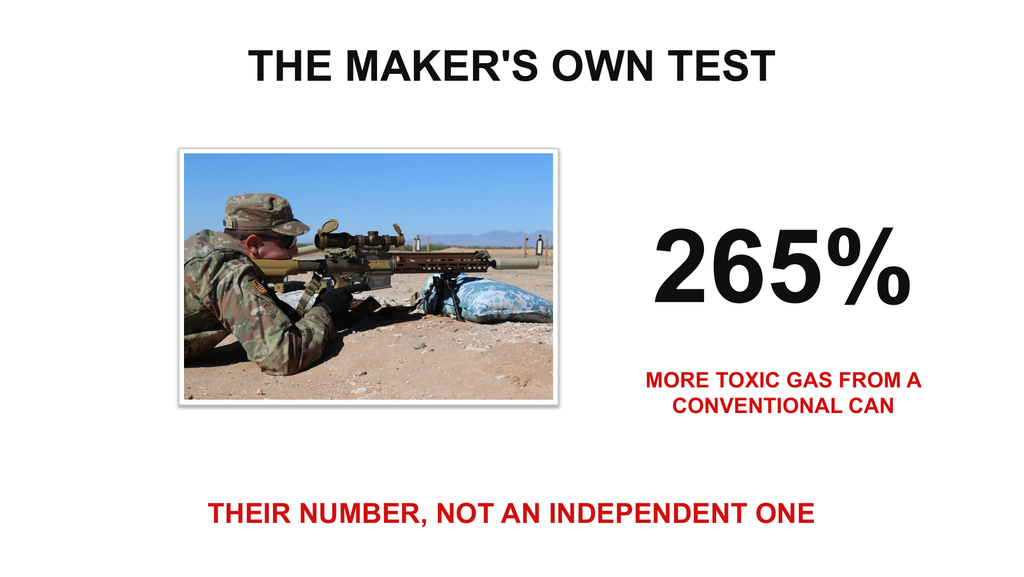
The first is gas. Trapped pressure travels back through the action and exits at the ejection port and charging handle, directly toward the shooter’s face. That gas carries ammonia and carbon monoxide, which is why shooters come off a suppressed line with red eyes and a headache.
The second is fouling and heat. Carbon in that gas has to settle somewhere, and a good deal of it stays in the action, so a suppressed rifle fouls faster than the same rifle shot bare. The can itself retains heat at the muzzle, which is precisely where someone is likely to take hold of the rifle.
Flow through designs
A newer category of suppressor addresses the gas problem directly. Rather than trapping gas and holding it, a flow through design steers it forward so it continues away from the shooter. Manufacturers in that space report substantially more gas reaching the shooter’s face with conventional designs.
The engineering tradeoff is a balance. The design has to reduce what blows back while still generating enough back pressure to cycle the action on subsonic ammunition.
12. First round pop is imaginary
It is not. It has a straightforward physical explanation.
A suppressor that has been sitting unused contains a tube full of ordinary air, and therefore a tube full of oxygen. When the first shot dumps burning powder into it, that oxygen ignites and burns along with the propellant, which makes the first shot audibly louder than the rest. Every subsequent shot is quieter because the tube now holds spent gas with the oxygen already consumed.
The traditional remedy still works. A small quantity of water or gel inside the can flashes to steam on the first shot and displaces the oxygen ahead of the burn. Running a can wet is an old technique and an effective one.
13. Suppressors wear out quickly
This was true a century ago. Early designs used soft, consumable material inside to absorb the report, and that material was designed to be removed and replaced after a set round count.
Modern construction is different. The interior is a stack of machined baffles in stainless steel or titanium, rated for more rounds than most owners will fire in a lifetime.
Rimfire is the exception, because .22 ammunition is dirty and fouling accumulates inside the can. Rimfire suppressors are therefore built to be disassembled and cleaned. A sealed centerfire suppressor is never opened and does not need to be.
What actually destroys a suppressor is misalignment. If a muzzle device or mount does not hold the can perfectly concentric with the bore, the bullet clips the baffles on the way out and tears the device apart from the inside. Correct alignment and, for rimfire, regular cleaning are what determine whether a suppressor lasts.
14. The best suppressor is the quietest one
Sound is set primarily by the ammunition, not the device. A supersonic round will never be quiet, and no suppressor changes that. A .50 calibre or a long range .338 Magnum will not approach the sound signature of a subsonic .300 Blackout, whatever is threaded to the muzzle.
Buyers reflect this in practice. The suppressor most popular with hunters is a short, light titanium model that locks onto a mount rather than threading on, so it cannot work itself loose in the field. It is chosen for handling, not for a decibel figure.
Near the top of the same lists sits a .22 suppressor that has been on the market for over a decade and is beaten on raw sound by newer designs in its class. It sells because it disassembles by hand for cleaning and the parts do not seize together. On rimfire the sound difference barely matters, since everything in that class is already quiet.
Modular suppressors that cover a rimfire, a 9mm and a .30 calibre rifle sell for the same practical reason, which is that one purchase replaces several. The compromise is performance, because the bore has to accommodate the largest bullet the owner will ever run through it. Firing something smaller means more gas escaping the front alongside the bullet, which is the safe failure mode compared with a baffle strike, but it is not optimised for any single cartridge.
Material choice follows the same logic. Titanium is light and handles pressure without difficulty. Heat is what damages it, so sustained fire through a short barrel will erode a titanium can.
The pattern across all of these is that buyers are not selecting the lowest decibel rating. They are selecting the suppressor that suits how they actually shoot.