
When scouting for the best 3-day survival backpack, the primary failure point I encounter isn’t fabric tearing, but a fixed suspension yoke that refuses to accommodate torso length, resulting in immediate shoulder fatigue under a 45lb load.
I’ve analyzed the geometry and material specs of the top contenders to separate professional-grade sustainment gear from heavy, uncomfortable “tacticool” marketing.
Disclosure: All products have affiliate links for earning commission to support the website when you purchase
| Model | Specs/Material | Signature Feature | Best Application |
|---|---|---|---|
| Mystery Ranch 3 Day Assault CL | 30L / 500D Cordura | Adjustable Futura Yoke | Rapid Deployment / Agility |
| 5.11 Rush 72 2.0 | 55L / 1050D Nylon | Admiral Pocket Organization | Medic / General Purpose |
| Vertx Gamut Overland | Unknown Vol / Cordura styling | Hidden MOLLE Panel | Urban / “Gray Man” |
| Eberlestock Halftrack | 35L / 1000D Nylon | Tunnel Air Suspension | Heavy Load Hauling |
The Gold Standard: Mystery Ranch 3 Day Assault CL
Technological Superiority in Suspension
In my experience, Mystery Ranch sets the benchmark for the best 3-day survival backpack solely because of the Futura Yoke. Unlike fixed-strap systems, this yoke includes an internal telescoping frame sheet that allows you to adjust the lift height to your exact spinal measurements. This transfers the weight from the trapezius muscles to the lumbar region effectively.
The pack utilizes the Tri-Zip design. In the field, this allows me to rip the bag open from top to bottom to access moisture-sensitive gear like socks or firing pin replacements stored at the bottom without dumping the entire contents into the mud. The move to 500D Cordura here is intentional; 1000D is overkill for this application and simply adds water weight when wet.
Pricing Anchor: Regularly priced at $450, currently available for around $399 depending on colorways.
The Reliable Workhorse: 5.11 Rush 72 2.0
Volume and Organization vs. Frame Rigidity
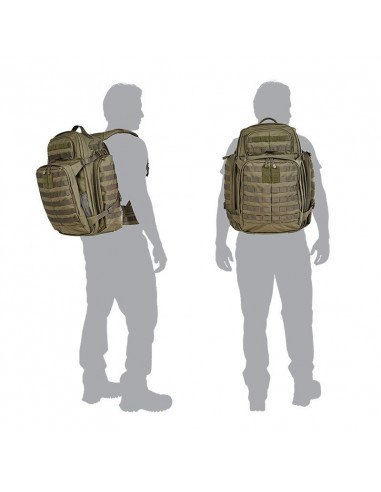
The Rush 72 is ubiquitous in the tactical community. It offers 55 liters of volume, which is massive for a 3-day rating. The layout appeals to my need for compartmentalization; the admin panel is excellent for maps, comms batteries (CR123s), and writing utensils. It uses 1050D Nylon, which makes the bag incredibly abrasion-resistant but significantly heavier than its competitors even when empty.
However, the suspension is where the budget shows. It lacks a rigid internal frame or stays. When loaded to capacity (50lbs+), I found the pack has a tendency to sag below the belt line, pulling backwards against the shoulders. It relies on the stiffness of the 1050D fabric itself for structure.
Pricing Anchor: Usually retails for $180, often on sale for $165.
The Gray Man Option: Vertx Gamut Overland
Covert Capabilities
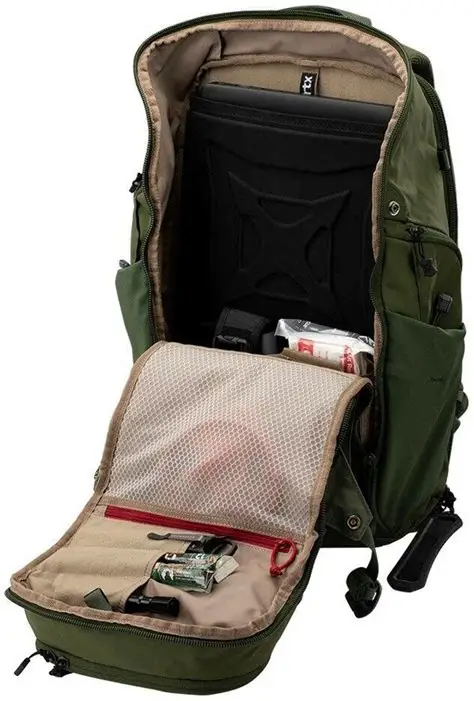
If your operational environment is urban, walking around with PALS webbing is a target indicator. The Vertx Gamut Overland solves this. It looks like a standard commuter bag but features a rapid-access pull tab that exposes a hidden MOLLE field for mounting a holster or IFAK. The aesthetic is strictly civilian, avoiding the “shooter” vibe entirely.
The trade-off is raw volume. While it can sustain you for 72 hours, you have to pack extremely light. It lacks the heavy load lifters found on military rucks, so it is not designed for hauling heavy ammo cans or water jerry cans.
Pricing Anchor: Generally sells for $260, check here for current deals around $230.
The Heavy Hauler: Eberlestock Halftrack
Tunnel Suspension and Weight Management
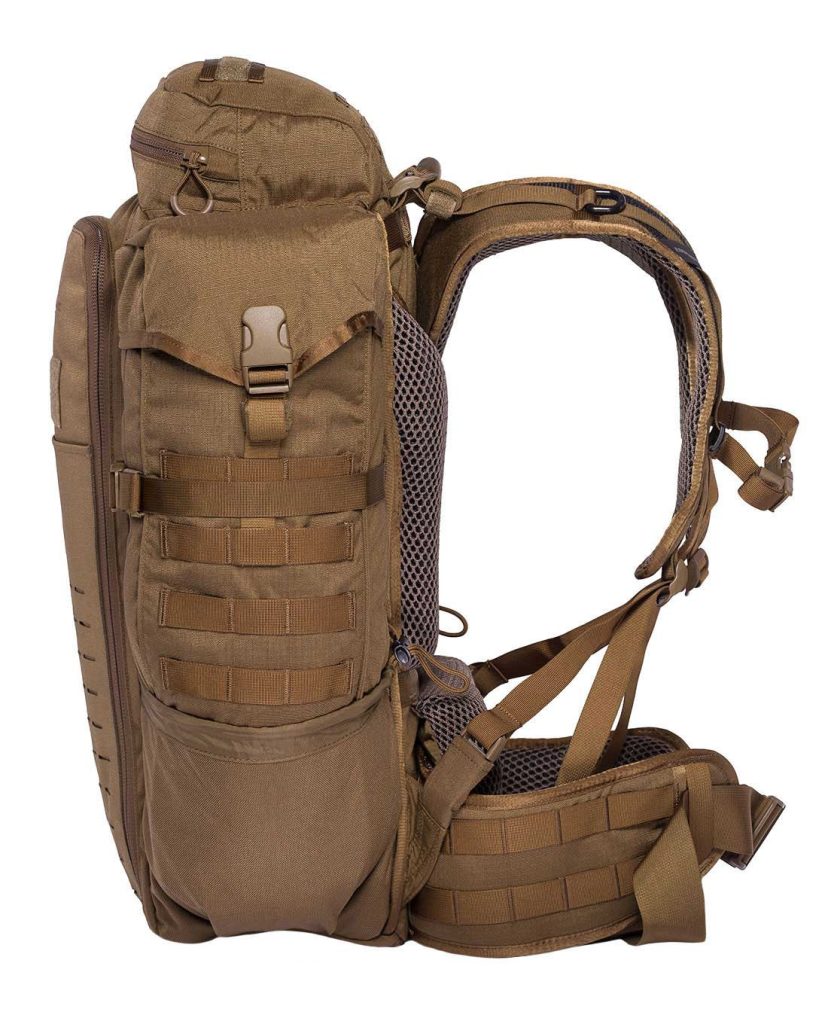
For those needing a military grade survival rucksack capable of carrying heavy ordnance or radio equipment, the Eberlestock Halftrack is the answer. It utilizes a deep “tunnel” padding system on the back which allows massive airflow—critical to preventing heat exhaustion. The internal aluminum stays are robust and handle 60lbs+ with ease.
The Halftrack includes a built-in rain cover, effectively making it a waterproof tactical emergency pack system without relying on potentially failing zipper coatings. The main downside is the base weight; it is a tank.
Pricing Anchor: Sits at the $300 mark, rarely discounted below $280.
Critical Nuances: Why “Mil-Spec” Usually Fails
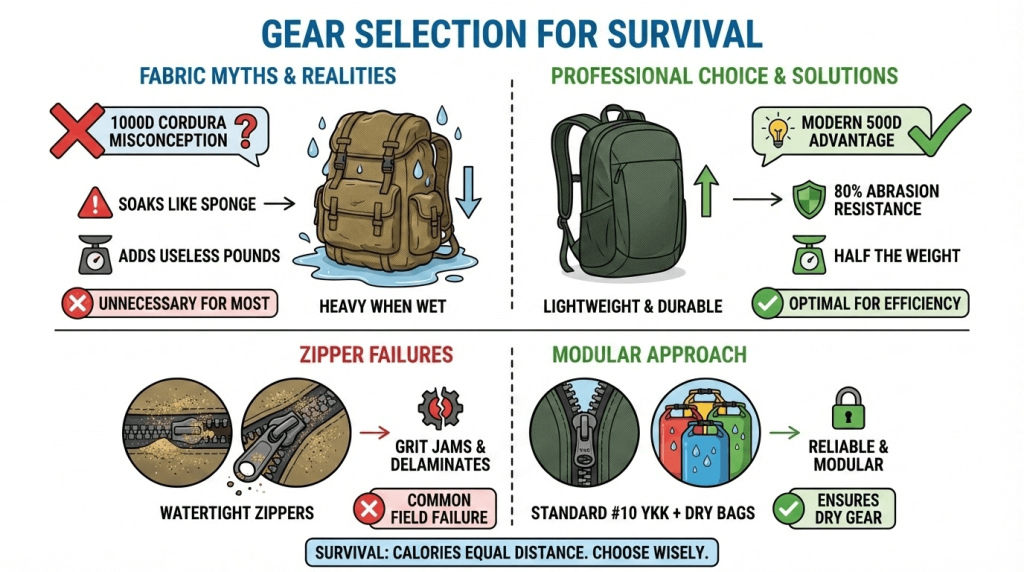
There is a dangerous misconception that 1000D Cordura is always superior. In a survival scenario, calories equal distance. 1000D fabric soaks up water like a sponge, adding pounds of useless weight to your kit. Modern 500D offers 80% of the abrasion resistance at half the weight. Unless you are low-crawling through concertina wire, 500D is the professional choice.
Furthermore, watertight zippers (PU coated) are a common failure point I see in the field. Grit and sand jam them up, and the coating delaminates over time. It is far better to use a pack with standard, hefty #10 YKK zippers and use internal dry bags for waterproofing. This modular approach ensures that if a zipper blows out, your gear stays dry.
Budget Alternatives
If the Tier 1 pricing is out of reach, look for surplus USMC ILBE Gen 2 packs. Designed by Arc’teryx, they offer world-class suspension for under $150 on the surplus market, though they are usually heavily used. Alternatively, modifying an ALICE pack with “Tactical Tailor” straps can modernize a cheap vintage frame, though it remains less ergonomic than modern internal frames.